
Cricket Wagon Wheel and Pitch Map: What They Show and How to Make One
What a cricket wagon wheel and pitch map show, how to read them, and how to make both for your own matches for free, two taps after each ball.
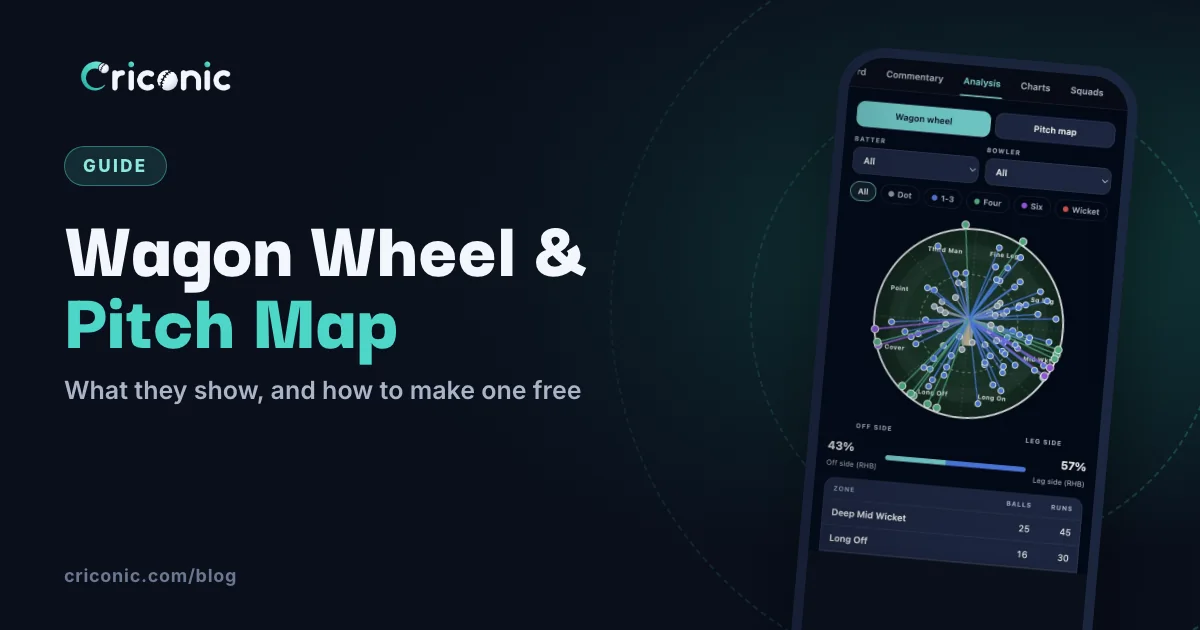
A wagon wheel shows where a batter hit every shot. A pitch map shows where every ball landed. Together they turn a scorecard into a story: where a batter scores, where a bowler should bowl, and why a wicket fell.
TV broadcasts have shown them for years. This guide explains how to read both, and how to make them for your own matches, for free.
What is a wagon wheel in cricket?
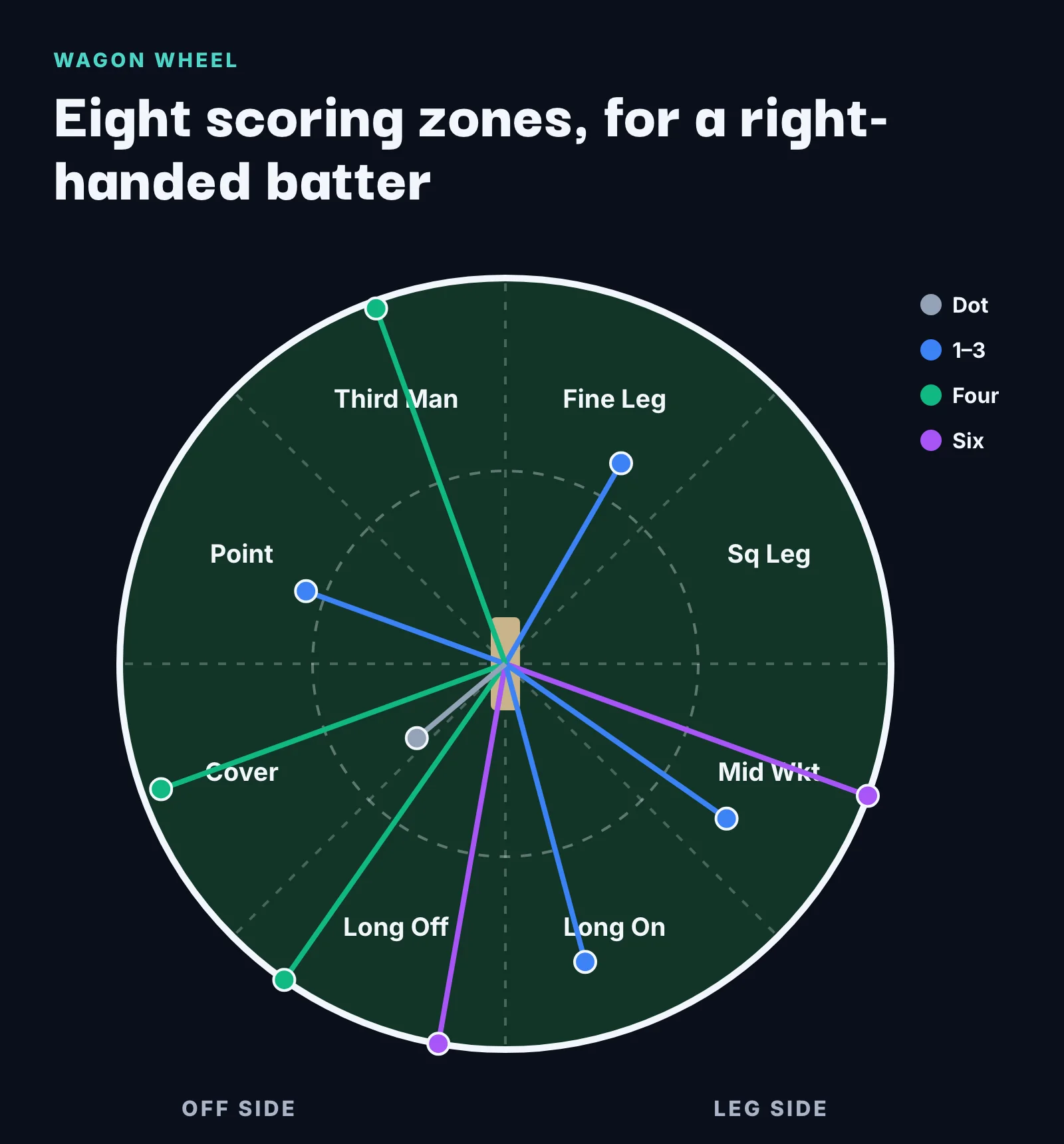
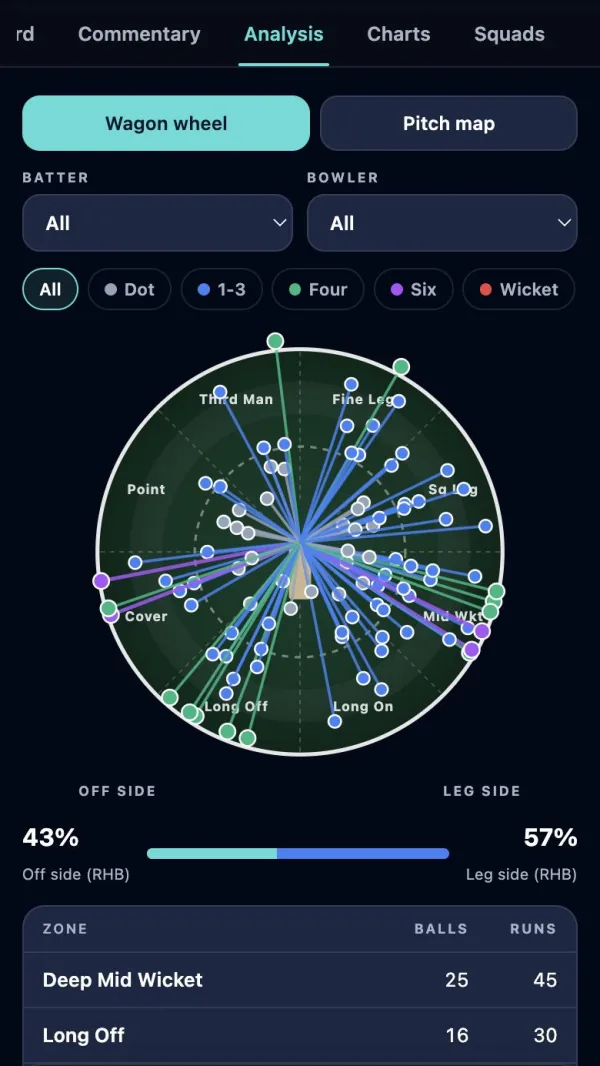
A wagon wheel is a picture of the ground with a line from the batter to where each shot went. The lines spread out like the spokes of a wheel, hence the name. Each line is coloured by the runs it brought, so boundaries stand out.
How to read a wagon wheel
- Off side or leg side? Most batters favour one side. A wheel full of leg-side lines says a bowler should stay outside off stump.
- Square or straight? Lines through point and square leg mean a cutter and puller. Lines down the ground mean a driver.
- Where the boundaries go. The colour of the lines shows the danger areas to protect with fielders.
- Where the singles go. Short lines show where a batter rotates the strike, and where a fielder saves runs.
What is a pitch map?
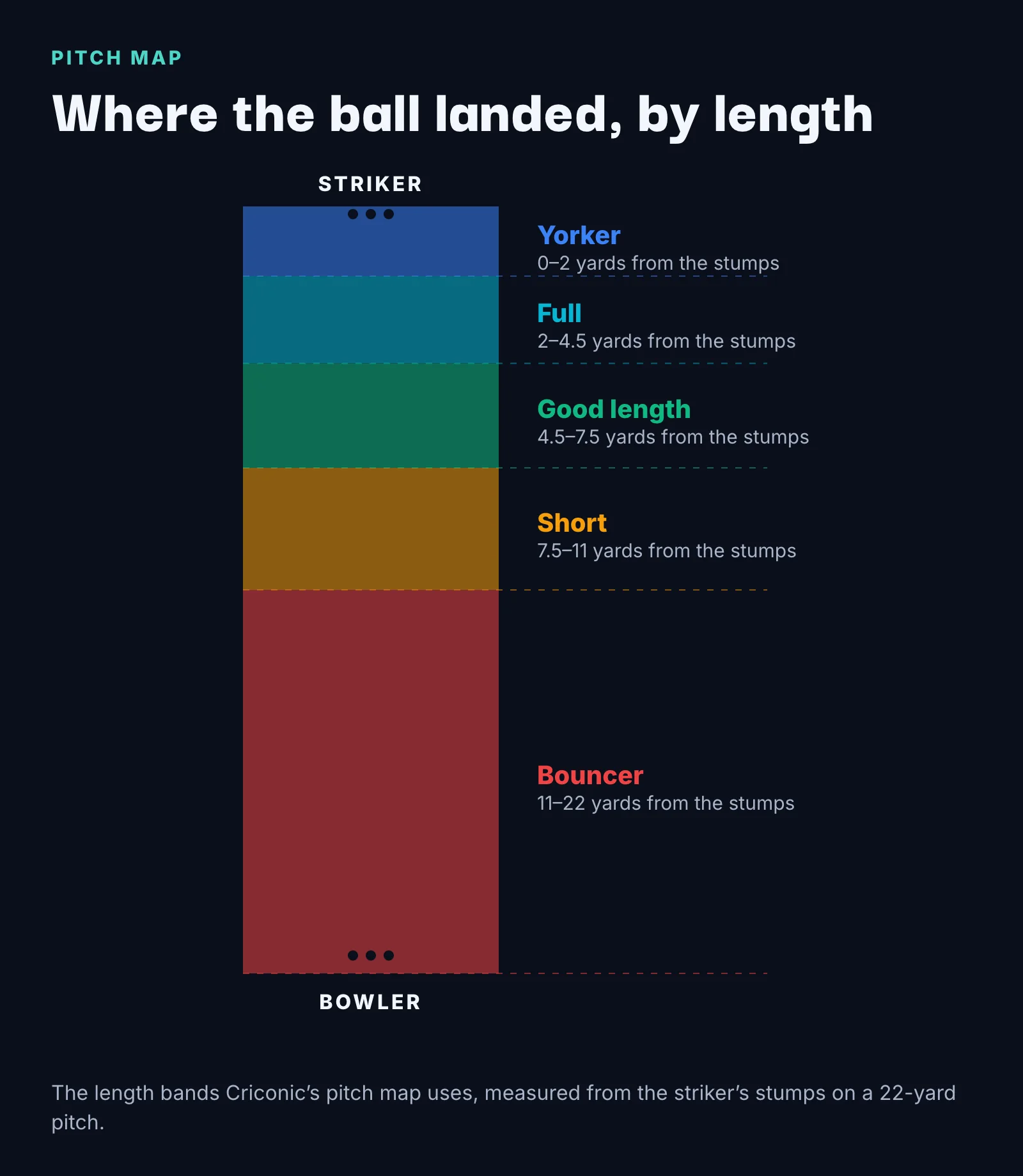
A pitch map shows the 22-yard strip from above, with a dot where each ball landed. Lengths are measured from the batter's stumps:
How to read a pitch map
- A tight cluster on a good length means a consistent bowler. Dots everywhere mean the bowler struggled with control.
- Where the wickets came from: the lengths and lines that got a batter out are the ones to bowl again.
- Line as well as length: the map also shows whether a ball pitched outside off, on the stumps or down the leg side.
How to make a wagon wheel and pitch map for free
You don't need a broadcast crew. When you score a match on Criconic, two quick taps after each ball build both charts:
- Where did it pitch? Tap the spot on the pitch where the ball landed, with right-hand or left-hand bat chosen at the top.
- Where did the ball go? Tap where the shot went on the field, then Done.
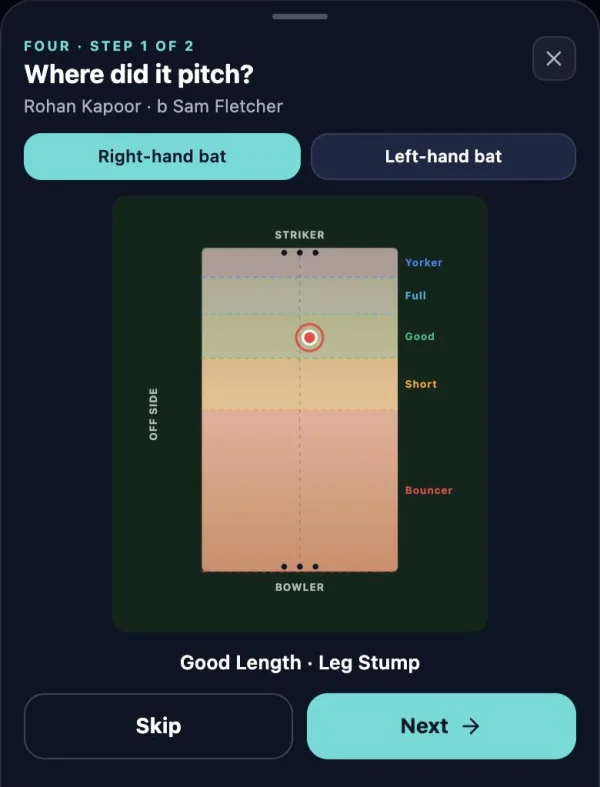
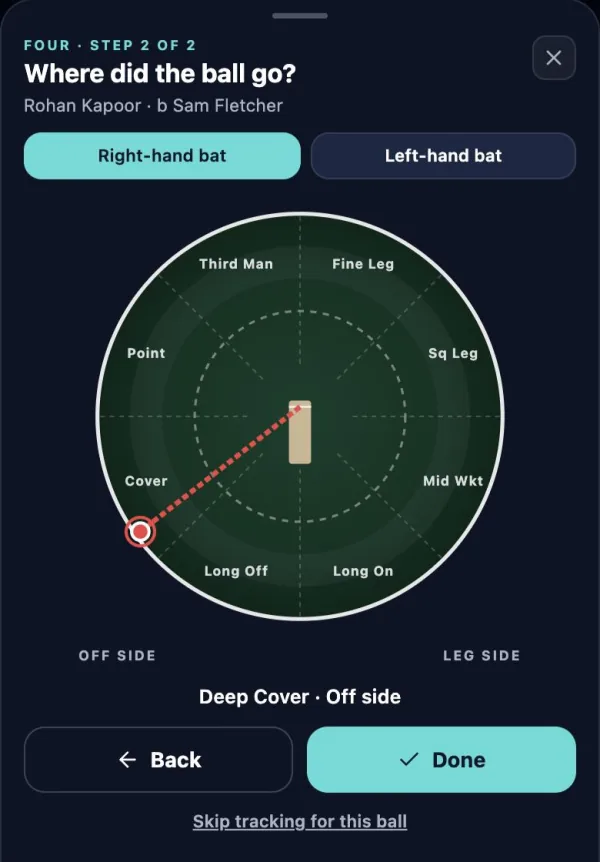
- Busy over? Skip tracking for a ball, or switch off Record Wagon Wheel or Record Pitch Map in the match menu.
- Box cricket: on a Box Cricket match the wheel is drawn as the box, with the front wall, the off-side net, the leg-side net and the back net. See our box cricket rules.
Reading the analysis after the match
Every match's public scorecard has an Analysis tab with the wagon wheel and pitch map for the whole match. Filter by batter or bowler to see one player, or one batter against one bowler, and by dots, 1s to 3s, fours, sixes or wickets.
New to scoring? Follow how to make a cricket scorecard.
Questions
What is a wagon wheel in cricket?
A chart of the ground with a line from the batter to where each shot went, coloured by the runs scored. It shows where a batter scores most and where the boundaries came from.
How do I make a cricket wagon wheel?
Score the match on Criconic with shot tracking on. After each ball, tap where the shot went. The wagon wheel builds itself and appears on the scorecard's Analysis tab.
What is a pitch map in cricket?
A view of the pitch from above with a dot where each ball landed. It shows a bowler's lengths, from yorker to bouncer, and lines, from outside off to down leg.
What do the colours on a wagon wheel mean?
On Criconic, grey is a dot ball, blue is 1 to 3 runs, green is a four and purple is a six. Wickets are marked in red.
Is the Criconic wagon wheel free?
Yes. The wagon wheel, pitch map and batter-against-bowler analysis are free on every scorecard.