
Wide Ball and No-Ball Rules in Cricket: Free Hit, Byes and Leg Byes Explained
Wide ball and no-ball rules explained: when each is called, how it's scored, free hit rules, byes and leg byes, umpire signals and common local variations.
Wides and no-balls give the batting side a free run and an extra ball, and a no-ball can bring a free hit. Byes and leg byes add runs that nobody hit. Together, these extras can decide a close match, and they cause more arguments than almost anything else in local cricket.
This guide explains when each one is called under the Laws of Cricket, how it is scored, the umpire signals, and how local tennis ball and box cricket matches usually change them.
Extras at a glance
| Extra | Runs to the batting side | Ball counts in the over? | Against the bowler? |
|---|---|---|---|
| Wide | 1, plus any runs taken | No | Yes |
| No-ball | 1, plus any runs (off the bat to the batter) | No | Yes |
| Bye | Runs taken | Yes | No |
| Leg bye | Runs taken | Yes | No |
Wide ball rules
Under Law 22, a ball is a wide if it passes so far from the batter that they couldn't hit it with a normal cricket shot, both from where they are standing and from a normal guard position.
- It isn't a wide if the batter moves and brings the ball within reach, or if the ball touches the bat or the batter.
- Since 2022 the Laws also take into account where the batter was standing as the bowler ran in, so a batter can't step away to turn a fair ball into a wide.
- Scoring: 1 run, plus any runs the batters complete or a boundary, all scored as wides and charged to the bowler. The ball is bowled again.
- Can you be out off a wide? Yes, but only stumped, run out, hit wicket or obstructing the field.
Wides in limited-overs cricket
ICC limited-overs matches judge wides more strictly: a ball down the leg side that passes the batter without touching them is usually a wide, and many grounds paint wide guidelines. A bouncer that passes over the batter's head is also called a wide.
No-ball rules
A no-ball is an illegal delivery. The most common reasons:
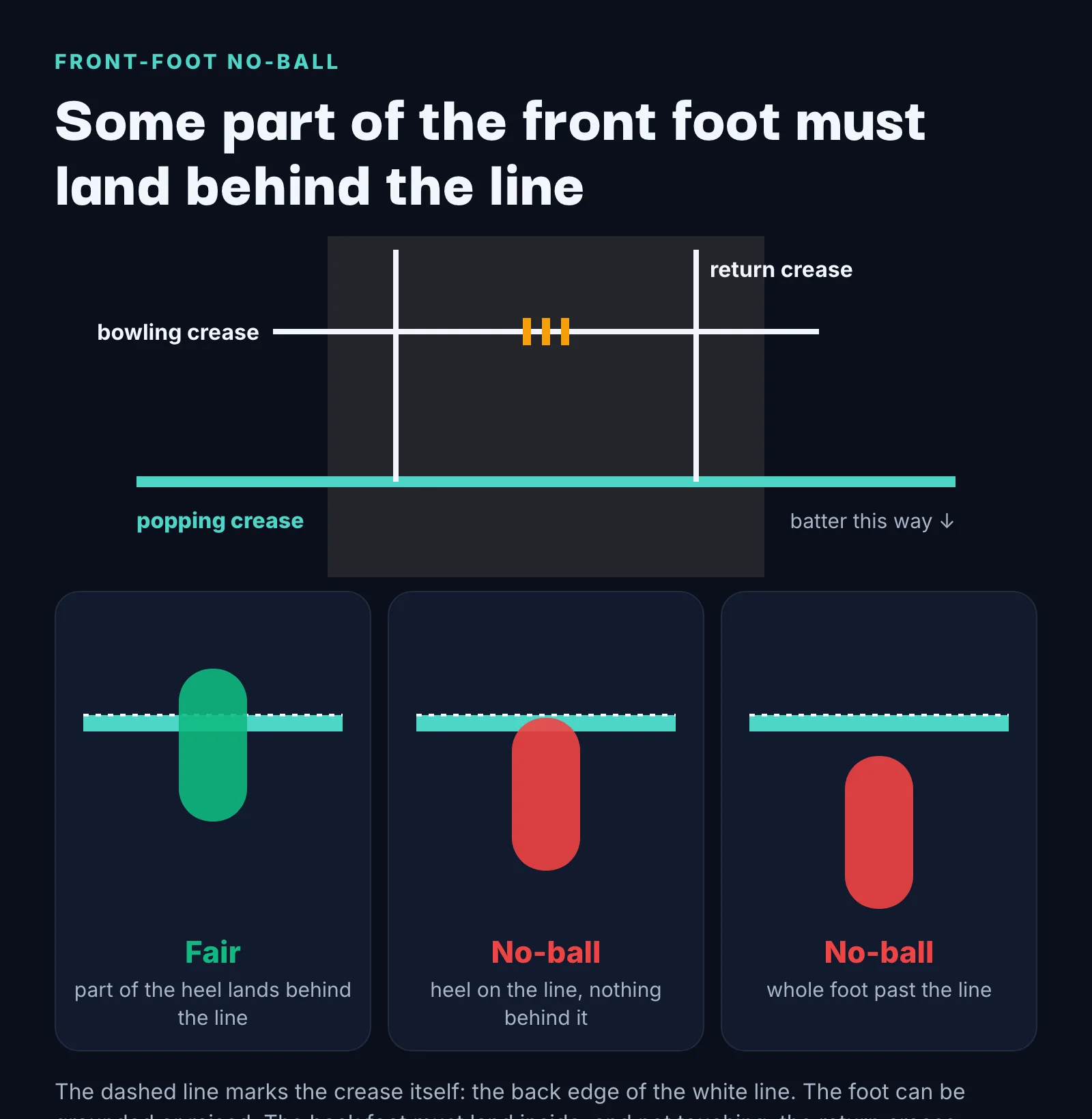
- Front foot: no part of the bowler's front foot lands behind the popping crease. The foot can be grounded or raised, but some part must be behind the line.
- Back foot: the back foot lands on or outside the return crease.
- High full toss: a ball that reaches the batter above waist height without bouncing (Law 41.7).
- Throwing: the bowler straightens their arm while delivering the ball.
- Too many bouncers: in ICC matches, one bouncer an over in T20s and two in one-day matches.
- Fielding: more than two fielders behind square on the leg side, or fielders breaking the power play limits.
- Bouncing: a ball that bounces more than twice, or rolls along the ground, before it reaches the batter's crease.
Scoring a no-ball
The batting side gets 1 run for the no-ball, plus any runs scored from it. Runs hit off the bat go to the batter. Runs the batters take without hitting it are scored as no-balls. The no-ball counts against the bowler and isn't one of the six balls of the over, but it does count as a ball faced by the batter.
Can a batter be out off a no-ball?
Only run out, hit the ball twice, or obstructing the field. They can't be bowled, caught, LBW, stumped or hit wicket.
Free hit rules
A free hit isn't in the Laws of Cricket. It comes from the ICC's playing conditions for one-day and T20 internationals, and most T20 leagues use it:
- The ball after any no-ball is a free hit.
- On a free hit, the batter can only be out the ways they can be out off a no-ball: run out, hit the ball twice or obstructing the field.
- The fielding side can't change the field for the free hit, unless the batters have changed ends.
- If the free hit is itself a wide or a no-ball, the next ball is a free hit too.
Test cricket has no free hit. Local tournaments vary, so put it on your rules sheet.
Byes and leg byes
- Bye: the ball passes the batter without touching the bat or body, and the batters run. A bye to the boundary scores 4 byes.
- Leg bye: the ball hits the batter's body, and they run. Leg byes only count if the batter tried to play the ball with the bat or tried to get out of the way. Otherwise the umpire calls dead ball and the runs don't count.
- Neither counts against the bowler, and neither spoils a maiden over.
Umpire signals for extras
| Call | Signal |
|---|---|
| Wide | Both arms stretched out sideways |
| No-ball | One arm stretched out sideways |
| Free hit | One arm raised, moved in a circle |
| Bye | One open hand raised above the head |
| Leg bye | Touching a raised knee |
How local cricket changes these rules
- No run for a wide or no-ball: some friendly and box cricket games just bowl the ball again.
- Leg-side wides: tennis ball tournaments call them strictly, and often paint wide lines.
- Bouncers: usually one an over, and one over the head is a wide.
- LBW and leg byes: with no LBW, many tournaments only allow leg byes when the batter played a shot.
See our tennis ball cricket rules and box cricket rules for more local variations.
Scoring extras on Criconic
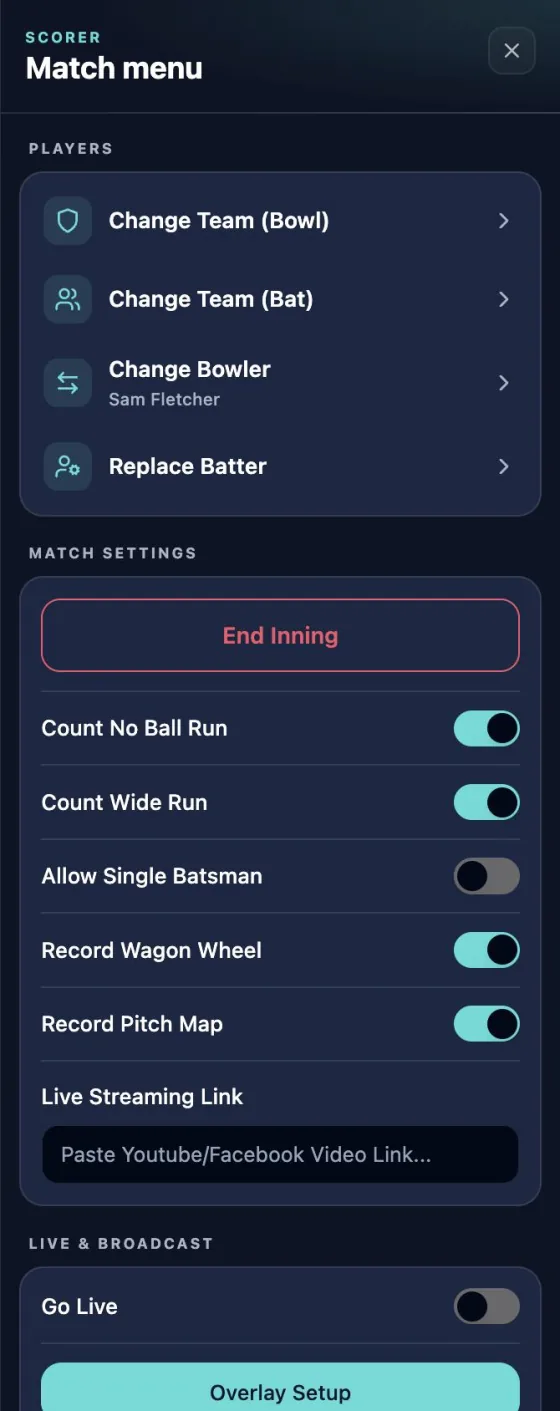
On Criconic's scorer screen, WD, NB, BYE and LB each take one tap, and you add any runs taken off the ball. The extra is counted in the right place: a wide or no-ball doesn't use up a ball of the over, and byes and leg byes aren't charged to the bowler.
If your match gives no run for a wide or a no-ball, switch off Count Wide Run or Count No Ball Run in the match menu.
The full Laws are published by the MCC.
Questions
What is the wide ball rule in cricket?
A ball is a wide if it passes too far from the batter to hit with a normal shot, from where they stand and from a normal guard position. It isn't a wide if the batter moves to bring it within reach or the ball touches them or the bat. It gives 1 run and is bowled again.
What are the no-ball rules in cricket?
The most common no-balls are a front foot with no part behind the popping crease, a back foot on the return crease, a full toss above waist height, a thrown delivery, too many bouncers in an over, and illegal field placings.
Is a heel on the line a no-ball?
Yes. The popping crease is the back edge of the white line, so some part of the front foot must land behind it. A heel on the line with nothing behind it is a no-ball.
What is the free hit rule?
In limited-overs cricket, the ball after a no-ball is a free hit: the batter can only be out run out, hit the ball twice or obstructing the field, and the fielding side can't change the field unless the batters have changed ends.
What is a leg bye in cricket?
Runs taken after the ball hits the batter's body rather than the bat. Leg byes only count if the batter tried to play the ball or get out of its way, and they aren't charged to the bowler.
Can a batter be out on a wide?
Yes, but only stumped, run out, hit wicket or obstructing the field.